

Fritz Hansen Series 7™ 3117: Jacobsen’s classic shell, re-set for work mode
A familiar outline, shifted into motion
The Series 7™ is one of those chairs you recognize instantly—curved, slim, and quietly graphic in a room. The 3117 version keeps that shell but moves it into a swivel, work-ready posture. It reads less like a “task chair” statement and more like a design classic that happens to roll. For an at-a-glance overview, see the Product page.

Fritz Hansen’s modernist through-line
Fritz Hansen positions Series 7 as an enduring staple in modern furniture history, emphasizing its long production life and its presence across home and contract interiors. The brand’s own Series 7 overview highlights the chair’s pressure-moulded veneer construction and the way the silhouette stays visually light while remaining robust. Fritz Hansen keeps the story centered on versatility rather than novelty.

From 1955 shell to 3117: the intent stays consistent
Arne Jacobsen designed the Series 7 in 1955 as a successor to the Ant—bigger, four-legged, and ready to adapt into multiple configurations over time. The Arne Jacobsen archives describe it as a highly practical, widely used design, later supported by add-ons and alternative bases. Arne Jacobsen Design Archives is explicit about that evolution, and Fritz Hansen’s 3117 listing shows the shell carried onto a swivel base for contemporary work settings. Series 7™ 3117

What you notice in daily use
The shell’s profile does the heavy lifting visually: a single continuous surface that reads clean from across a room, then feels more nuanced when you sit. In the 3117 format, the swivel action changes how the chair behaves in groups—less “lined up,” more conversational—useful in studios and meeting rooms where people turn between screens and table talk. Architectural context still matters, too: editorial histories often frame Series 7 as a molded-veneer breakthrough that moved easily between public and private interiors. Architectural Digest
An installation story, told by one delivery
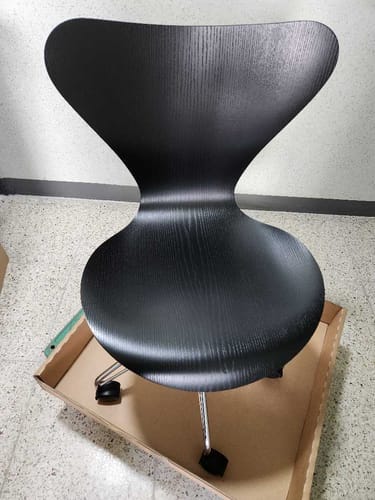
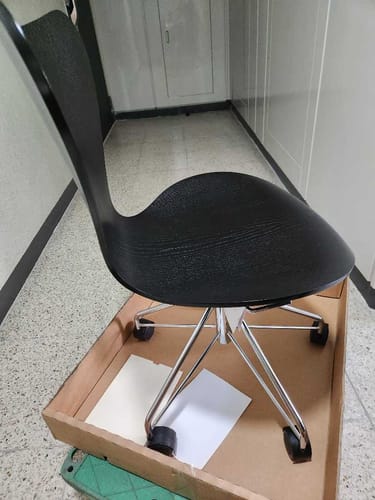
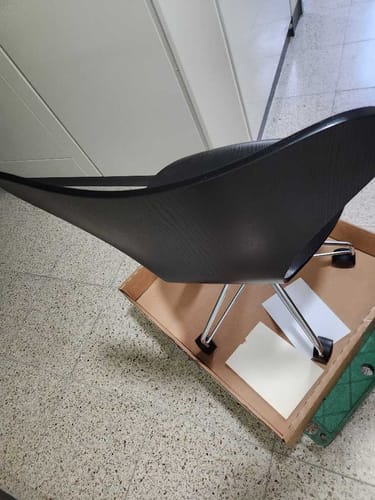
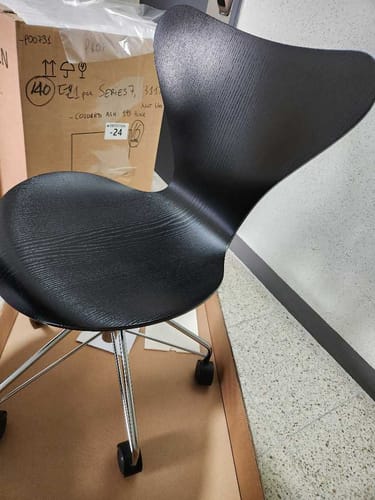
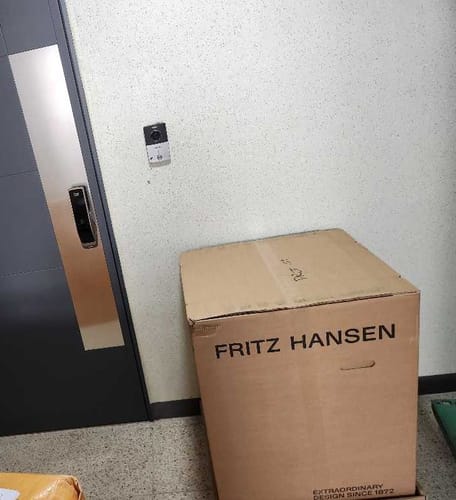
A customer notes their Series 7™ 3117 arrived on October 30, 2025, configured with a black coloured-veneer shell and a bright chromed base, plus soft wheels suited to hard floors (with brakes). The photos show the chair settling into a work corner without changing the visual “temperature” of the room—more design object than office gear.
Where it fits best
This is a strong choice for dining tables that double as work zones, conference rooms that need to look composed when empty, and creative studios where chairs constantly change direction. The “not upholstered” shell keeps the silhouette crisp, so it pairs well with quieter materials—wood tables, matte metals, stone—without competing. If your space is more lounge-led, it will read intentionally upright; if your space is work-led, it brings a clear design lineage into the mix.
#FritzHansen #Series7 #Series7Chair #ArneJacobsen #DanishDesign #ScandinavianDesign #ModernistDesign #MoldedVeneer #TaskChair #SwivelChair #ConferenceRoomDesign #DiningChair #DesignHistory #InteriorArchitecture #WorkspaceInteriors #TimelessDesign