

Fritz Hansen PK22™ Wicker Lounge Chair: Kjærholm’s Lightweight Modern Classic
A quiet icon, translated into wicker
The PK22™ sits in that rare category of chairs you notice for their restraint. In the wicker version, the design reads warmer and more tactile, while the silhouette stays crisp and architectural. It’s a lounge chair that holds its own in a room without turning into a centerpiece by force.

Fritz Hansen and the Kjærholm lineage
Fritz Hansen’s relationship to Poul Kjærholm is rooted in long-term stewardship: the brand produces and distributes designs from “The Kjærholm Collection,” keeping the originals in active circulation rather than treating them as archival objects. That continuity matters with a chair like PK22, where proportion and metalwork are the whole point. Fritz Hansen PK22™.
Background and intent: the 1956 PK22
PK22 was designed in 1956, and it’s often discussed as a study in “ideal form and dimension”—Kjærholm’s own framing echoed by Fritz Hansen. ([fritzhansen.com](https://www.fritzhansen.com/en/categories/products/popular-series/pk22?utm_source=openai)) A closely related example sits in MoMA’s collection as the “Triennale Chair” (1956), produced by E. Kold Christensen with a cane seat over a steel frame. MoMA collection record. ([moma.org](https://www.moma.org/collection/works/2514?utm_source=openai))
What the wicker version changes—and what it doesn’t
The steel base is the visual structure: thin, spring-like lines that define the chair in profile, and make the seat appear almost suspended. Wicker shifts the experience from tailored upholstery to a breathable, textural surface, but it doesn’t soften the geometry—if anything, it highlights the contrast Kjærholm liked between industrial precision and natural material. ([fritzhansen.com](https://www.fritzhansen.com/en/categories/products/popular-series/pk22?utm_source=openai))
Installation story
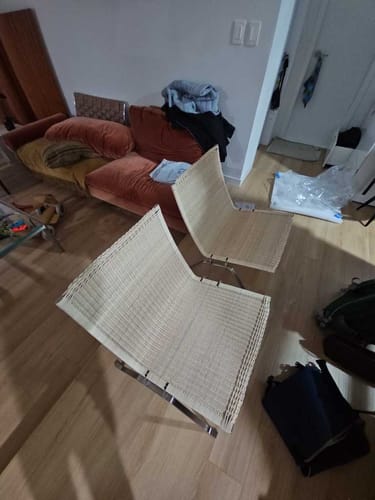
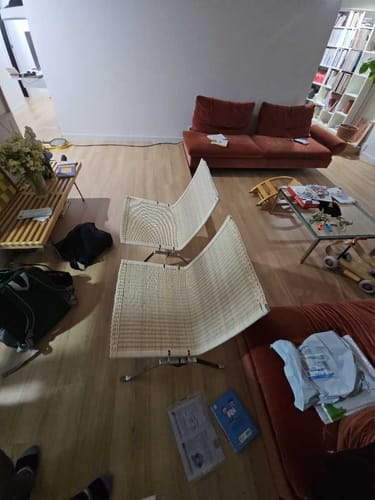
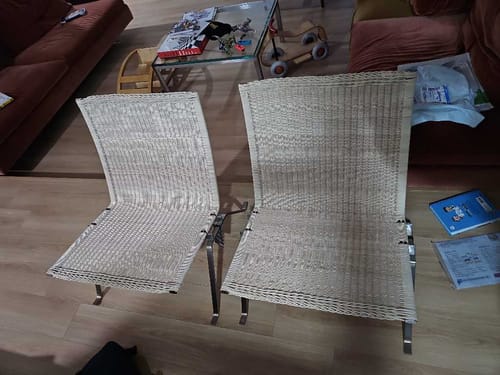
A customer report notes delivery completed on October 30, 2025, in the natural wicker configuration paired with a satin-brushed steel base. The photos show the chair reading as light in the room, with the weave bringing visual warmth while the frame stays sharp and minimal.
Where it fits best
PK22 works well in spaces that already value negative space—living rooms with low tables, libraries, studio corners, and gallery-like entry areas. The wicker version is especially at home where you want a classic modern outline without the visual density of leather. It’s also a strong pairing with other material-forward pieces—stone, linen, oiled woods—because the chair’s structure stays legible from every angle. For historical grounding, auction cataloging also records PK22 as a 1956 design. Christie’s catalog entry. ([christies.com](https://www.christies.com/en/lot/lot-5973465?utm_source=openai))
#FritzHansen #PK22 #PoulKjaerholm #DanishModern #ScandinavianDesign #ModernistDesign #WickerChair #LoungeChair #SteelFrame #DesignClassic #ArchitecturalInteriors #MinimalInteriors #CollectibleDesign #NordicDesign #LivingRoomDesign