

Cassina Soriana Fabric Lounge Chair: Scarpa-era softness held in a steel embrace
A modern classic that still reads as radical
Cassina’s Soriana lounge chair is one of those designs that explains itself the moment you see it: a generous upholstered volume, cinched and disciplined by an external metal structure. First introduced in 1969 by Afra and Tobia Scarpa, it reflects a period when new foams and new domestic habits were reshaping what “comfortable” could look like. This is the Soriana story in its clearest form—softness, visibly engineered. See the Product page for the configuration shown here.

Cassina’s approach: heritage, edited for current use
Cassina has kept Soriana in circulation through careful re-editions, treating the chair less as a “retro” object and more as a living part of its catalog. The brand’s current Soriana armchair listing frames it as an invitation to a more relaxed, informal way of sitting, while updating the internal build with contemporary foams and recycled-fibre padding. That balance—recognizable silhouette, refreshed internals—is central to why Soriana continues to feel relevant. Reference: Cassina.

Background and intent: foam as structure
Architectural Digest notes that the Scarpa duo developed Soriana under real trade-show pressure in late 1969, leaning into expanding polyurethane to create a seat with an intentionally creased cover, gathered and held by a large metal clamp—more “bound” than “built.” That same source highlights Soriana’s Compasso d’Oro recognition, underscoring how the chair’s apparent complexity is achieved with a small set of straightforward moves. See: Architectural Digest and the 1970 award listing: Compasso d’Oro 1970.
Design points you feel immediately
What makes Soriana distinctive isn’t just the bulk; it’s the legibility of how that bulk is controlled. The exposed brace reads like a restraint system, turning upholstery into something closer to drapery under tension—folds, puckers, and compression points become part of the design language. In use, the chair encourages a low, lounging posture, but the external frame keeps the outline from going slack, which is why Soriana can live comfortably in both lived-in family rooms and more composed, gallery-like interiors.
Installation story
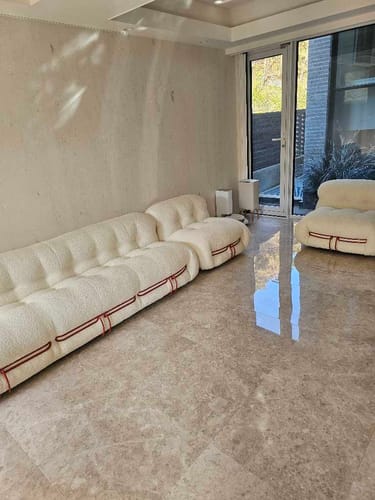
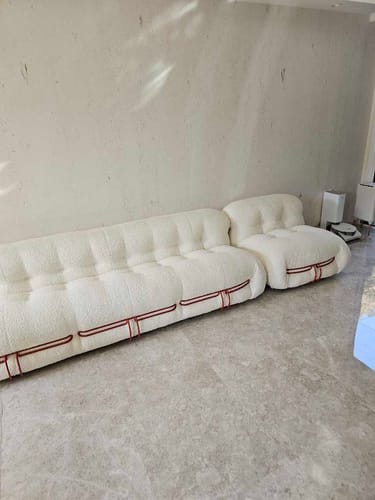
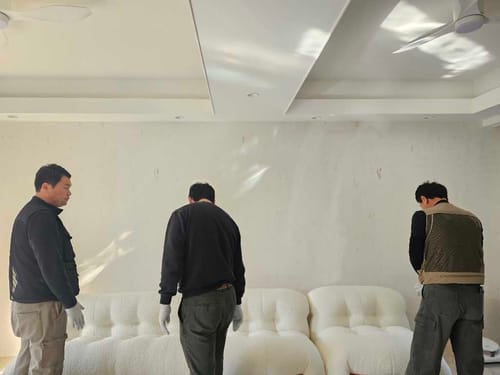
A customer review notes delivery completion on November 29, 2025, and describes a fabric upholstery selection with a high-gloss painted structure in a vivid red tone. The overall impression in the photos is consistent with Soriana’s defining trait: the upholstery reads soft and relaxed, while the visible frame keeps the form crisp at the edges.
Where it fits best
Soriana works when you want a room to acknowledge comfort without defaulting to anonymity. It pairs especially well with restrained architecture—plaster, timber, stone, or clean-lined casework—where its folds and clamp details can do the visual work. It’s also a strong counterpoint in spaces dominated by rectilinear seating, because it introduces volume without looking casual in a sloppy way. For collectors, it reads as a Scarpa-era statement; for everyday living, it’s a chair that makes the mechanics of softness part of the décor.
#Cassina #Soriana #AfraScarpa #TobiaScarpa #ItalianDesign #ModernClassic #LoungeChair #UpholsteryDesign #DesignHistory #CompassoDOro #1970sInteriors #LivingRoomDesign #CollectibleDesign #FoamInnovation #StatementSeating