

Cassina LC4 Leather Chaise Longue: the modernist recliner refined in production
A modernist chaise that still reads as engineering
The LC4 is often photographed as a sculpture, but it’s best understood as a piece of functional research: a reclining surface that can be positioned continuously rather than locked into a few angles. Cassina’s current production keeps the object crisp—frame, base, and upholstery each doing a distinct job—so the chair remains legible in a room. For a closer look at this specific edition, see the Product page.

Cassina and the afterlife of 20th-century originals
Cassina’s identity is tightly linked to its stewardship of design “masters,” and the LC4 sits inside the company’s Le Corbusier®, Pierre Jeanneret®, Charlotte Perriand® group. That context matters: the chair isn’t treated as a retro reissue, but as a continuously manufactured reference point in the brand’s catalog and archives (Cassina Maestri).

From 1928 prototype culture to 1965 production culture
The LC4 was designed in 1928 by Le Corbusier, Pierre Jeanneret, and Charlotte Perriand, and it was publicly presented in Paris at the Salon d’Automne in 1929 (Cassina LC4). In museum terms, it’s cataloged as “Chaise Longue (LC/4)”—a reminder that the object’s status comes from both authorship and its early industrial vocabulary (MoMA collection record).

What you feel: the moving cradle and the fixed base
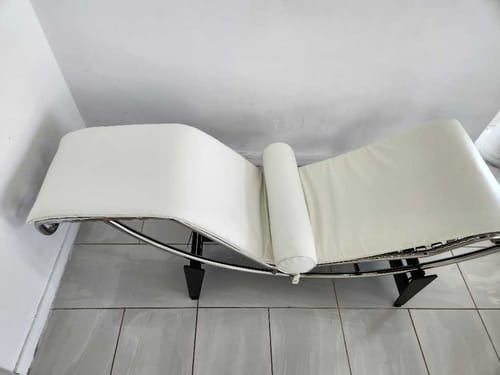
The experience is defined by separation: the reclining cradle moves, the base stays planted. That split makes the adjustment intuitive—shift your weight, slide to a new balance point—and it keeps the silhouette light, almost diagrammatic, even when upholstered in leather. The headrest functions like a small calibration point, supporting the neck without turning the chair into a bulky lounge.
An installation story, delivered and settled
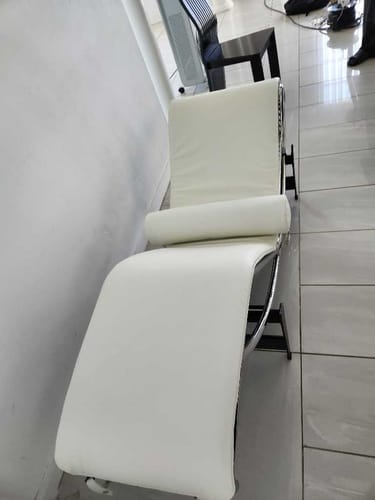
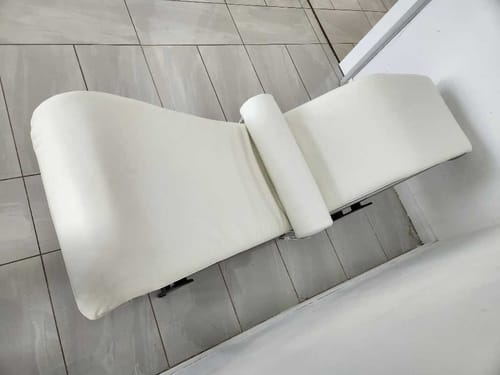
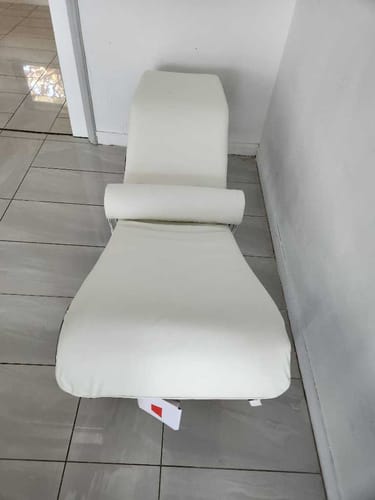
The owner notes the LC4 Leather Chaise Longue arrived on December 1, 2025, and highlights a coordinated leather headrest and upholstery selection in a bright white tone. The photos read as a careful placement: the chair’s frame stays visually minimal while the leather surface becomes the room’s “field” of color. It’s a reminder that with the LC4, installation is less about assembly and more about deciding the chair’s viewing angle in the space.
Where it fits best
The LC4 works in rooms that reward clear lines: living areas with a strong axis, bedrooms that need one reading piece, or studios where you want a single object to “explain” the space. It pairs naturally with other modernist furniture, but it also sits well alongside softer pieces because its structure is visually spare. If your interior already has statement art, the LC4 won’t compete—its presence is graphic, not loud.
#Cassina #LC4 #ChaiseLongue #LeCorbusier #PierreJeanneret #CharlottePerriand #ModernistDesign #DesignHistory #ItalianDesign #IconicFurniture #TubularSteel #LeatherUpholstery #MidCenturyModern #ArchitecturalInteriors #CollectibleDesign